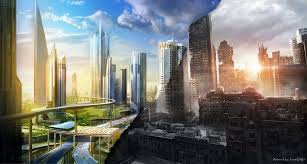
For a long time, I treated dystopian novels as exaggerated warnings—interesting, sometimes disturbing, but ultimately fictional. Total surveillance, rigid social control, mass manipulation, and loss of individuality felt distant, belonging to imaginary futures rather than everyday life. That perception changed gradually, almost unnoticed, as I read more dystopian literature and began recognizing its themes in modern society.
Dystopian books do not predict the future in a literal sense. Instead, they sharpen our awareness of the present. They take existing tendencies—technological dependence, political polarization, social pressure, media influence—and amplify them until their consequences become impossible to ignore. Reading these novels reshaped how I interpret news headlines, digital platforms, workplace culture, and even my own habits.
This essay reflects on how dystopian literature altered my understanding of modern society, particularly in relation to control, propaganda, conformity, and resistance. Through examples from well-known dystopian novels, I explore how fiction became a lens through which reality looks both clearer and more unsettling.
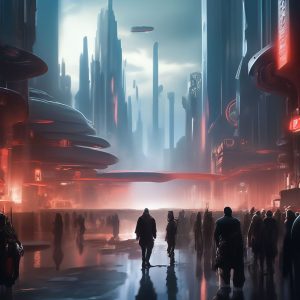 Control Without Chains: Power in Modern and Dystopian Worlds
One of the most striking lessons dystopian literature offers is that control does not always rely on force. In fact, the most effective systems of domination are often subtle, invisible, and even comfortable.
George Orwell’s 1984 presents a world of constant surveillance, where citizens are monitored through telescreens and punished for unapproved thoughts. When I first read it, the idea felt extreme. Yet revisiting the novel in the age of smartphones, smart devices, and data tracking made its themes uncomfortably familiar. While modern societies do not operate under a single authoritarian regime like Orwell’s Party, surveillance has become normalized. Location tracking, targeted advertising, and algorithmic monitoring are often accepted in exchange for convenience.
Aldous Huxley’s Brave New World offers an even more unsettling model of control—one based on pleasure rather than fear. Citizens are conditioned from birth, distracted by entertainment, and pacified with substances that eliminate discomfort. What struck me most was how little resistance exists in such a system. People do not rebel because they are satisfied, distracted, and emotionally managed.
Modern society increasingly resembles aspects of Huxley’s vision. Endless content, personalized feeds, and instant gratification reduce the desire to question or reflect deeply. Dystopian literature helped me realize that freedom is not only threatened by oppression but also by comfort. When people are entertained, distracted, and constantly stimulated, critical thought becomes optional—and eventually rare.
Margaret Atwood’s The Handmaid’s Tale adds another layer to this understanding by showing how control can emerge gradually, often under the guise of safety, morality, or tradition. The regime in the novel does not appear overnight; it builds through incremental changes that many accept until resistance becomes dangerous. This gradual erosion of rights made me more sensitive to how modern societies normalize restrictions when they are introduced slowly and framed as necessary.
Propaganda, Media, and the Shaping of Truth
Another way dystopian literature reshaped my worldview is through its portrayal of propaganda and information control. These novels reveal how truth can be manipulated not only through lies, but through repetition, emotional framing, and selective storytelling.
In 1984, the Ministry of Truth constantly rewrites history, ensuring that official narratives are never questioned. While modern media does not operate with such blunt authority, dystopian fiction made me more aware of how narratives are shaped today. Algorithms decide what information we see, headlines prioritize engagement over accuracy, and misinformation spreads faster than corrections.
Ray Bradbury’s Fahrenheit 451 explores a society where books are banned, not because people are forced to stop reading, but because they gradually lose interest in complexity. Entertainment becomes shallow, fast-paced, and emotionally stimulating, leaving no room for reflection. What struck me most was that censorship in this world is cultural before it is political.
This idea changed how I view modern media consumption. Short-form content, outrage-driven headlines, and simplified debates often replace nuanced discussion. Dystopian literature taught me that propaganda does not always look like government posters or official announcements. It can appear as trends, viral narratives, or emotionally charged content that discourages critical thinking.
These books also emphasize how language itself can be weaponized. Simplified slogans, repeated phrases, and emotionally loaded terms shape perception. Once I became aware of this pattern, I started noticing how modern discourse often relies on repetition rather than reasoning. Dystopian literature sharpened my sensitivity to language and made me more cautious about accepting narratives at face value.
Social Pressure, Conformity, and the Fear of Standing Out
Beyond political control and media influence, dystopian novels deeply explore social pressure—the invisible force that shapes behavior even in the absence of laws or punishment. This theme resonated strongly with my experience of modern society.
In Brave New World, individuality is discouraged not through violence but through conditioning. Citizens are taught to desire sameness, stability, and conformity. Those who think differently are seen as strange or dysfunctional. This portrayal made me reflect on how modern societies often reward conformity subtly, through social approval, career incentives, and digital validation.
Social media intensified this realization. Platforms encourage constant comparison, performance, and alignment with popular opinions. Dystopian literature helped me recognize how fear of exclusion can be as powerful as fear of punishment. The desire to belong often leads people to silence doubts, soften opinions, or avoid uncomfortable questions.
Suzanne Collins’s The Hunger Games highlights how spectacle reinforces control. Public rituals, competitions, and media narratives distract from injustice while reinforcing hierarchy. Although the novel focuses on a fictional authoritarian system, its emphasis on entertainment as a political tool feels strikingly relevant. Reality television, viral outrage, and sensational news often divert attention from systemic issues.
What dystopian literature ultimately revealed is that conformity thrives when questioning becomes socially costly. Resistance does not disappear—it becomes isolated. Recognizing this dynamic made me more attentive to moments when consensus feels forced rather than earned.
Resistance, Awareness, and the Value of Critical Thought
Despite their bleak settings, dystopian novels are not entirely pessimistic. Most of them contain moments of resistance—sometimes successful, sometimes tragic, but always meaningful. These moments highlight the power of awareness, memory, and critical thinking.
In 1984, Winston’s rebellion begins not with action, but with thought—with the simple act of questioning reality. In Fahrenheit 451, Montag’s transformation starts when he encounters ideas that disrupt his passive existence. In The Handmaid’s Tale, resistance survives through storytelling, memory, and refusal to forget the past.
These narratives reshaped how I view resistance in modern society. Resistance does not always look dramatic. It can be quiet: choosing to read deeply, questioning sources, slowing down consumption, and engaging in uncomfortable conversations. Dystopian literature reminded me that awareness itself is a form of defiance.
The books also emphasize the importance of remembering history. Many dystopian societies erase or distort the past to maintain control. This made me reflect on how historical amnesia weakens societies, making them more vulnerable to repeated mistakes. Preserving memory—personal, cultural, and historical—is portrayed as an act of resistance.
Perhaps the most lasting impact of dystopian literature on my worldview is the realization that freedom requires effort. It is not a static condition, but a practice. Critical thinking, empathy, and self-reflection are skills that must be actively maintained. Without them, societies drift toward convenience, simplicity, and control.
Table: Dystopian Themes and Their Modern Reflections
| Dystopian Theme | Example Novel | Key Idea | Reflection in Modern Society |
|---|---|---|---|
| Surveillance | 1984 (Orwell) | Constant monitoring | Data tracking, digital privacy concerns |
| Pleasure-based control | Brave New World (Huxley) | Distraction over freedom | Entertainment overload, instant gratification |
| Media manipulation | Fahrenheit 451 (Bradbury) | Shallow content replaces thought | Algorithm-driven media, clickbait |
| Social conformity | The Hunger Games (Collins) | Fear enforces obedience | Social pressure, online validation |
| Gradual loss of rights | The Handmaid’s Tale (Atwood) | Incremental normalization | Acceptance of restrictions framed as safety |
Conclusion
Dystopian literature fundamentally changed how I view modern society by teaching me to look beneath the surface. What once seemed like exaggerated fiction now feels like a magnifying glass held up to reality. These novels do not claim that we live in dystopias, but they warn us about the paths that lead there.
Through stories of control, propaganda, conformity, and resistance, dystopian literature sharpened my critical awareness. It made me more cautious about comfort, more skeptical of narratives, and more attentive to the subtle forces shaping behavior. Most importantly, it reminded me that freedom is fragile—not because it is easily taken, but because it is easily neglected.
Reading dystopian fiction is not about fearing the future. It is about understanding the present. In a world filled with information noise, social pressure, and technological mediation, these novels remain profoundly relevant. They challenge readers to think, question, and remember—and in doing so, they quietly resist the very forces they warn against.