In an age dominated by screens, algorithms, and fragmented attention, the act of reading remains one of the most powerful ways to connect with human experience. Books are more than sources of entertainment or knowledge; they are windows into other lives, emotions, and realities. When we read deeply—beyond the surface of the story—we don’t just…
Category: Blog
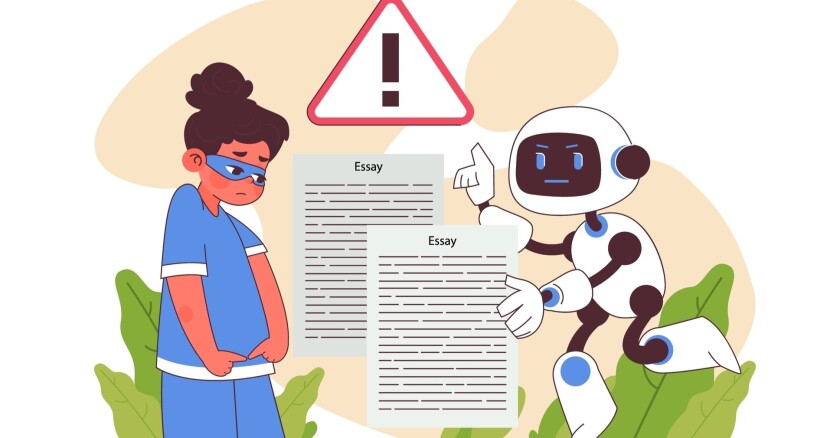
Detecting AI-Written Essays: How Reliable Are Modern Checkers?
In the wake of artificial intelligence revolutionizing how we write, think, and communicate, academia has found itself confronting a new and complex challenge: distinguishing human writing from machine-generated text. Since 2022, when advanced large language models such as ChatGPT entered the mainstream, universities and educators worldwide have been grappling with the question — how can…
Beyond Cheating: Rethinking Academic Integrity in a Post-Digital World
For decades, the concept of academic integrity has been grounded in the assumption that students are the sole producers of their academic work. Cheating, plagiarism, and fabrication were clear violations of scholarly ethics. Yet, as digital technologies have evolved, so too have the boundaries between assistance and misconduct. The rise of artificial intelligence, online collaboration,…
AI Literacy in the Classroom: Why Every Student Should Learn Prompting Skills
Not long ago, “digital literacy” meant knowing how to search for information online, create a presentation, or write an email. Today, a new literacy is emerging — AI literacy — the ability to interact effectively with artificial intelligence systems. Just as reading and writing became essential tools of the industrial and information ages, prompting has…
The Hidden Curriculum of Writing: What Universities Don’t Teach About Academic Style
Every university has a syllabus. It tells students what to read, what to write, and when to submit. Yet beyond these explicit instructions lies an unspoken system of expectations—a hidden curriculum that shapes how academic writing is perceived, produced, and judged. Students quickly learn that mastering grammar or citation styles is not enough. What truly…
The Lost Art of Paraphrasing: How to Write with Integrity in the Age of Rewriting Tools
Once upon a time, paraphrasing was considered one of the hallmarks of intellectual maturity. It wasn’t merely about “changing words” — it was a test of comprehension, interpretation, and voice. A good paraphrase showed that a writer could absorb someone else’s ideas, digest them, and reproduce them in a new linguistic and conceptual form. It…
The Ethics of Editing: When Does Help Become Misconduct?
In the modern academic and professional world, writing is rarely a solitary act. Behind many polished papers, articles, or dissertations stand editors—professionals, peers, mentors, or digital tools—who help shape the text into its final form. Editing, in its best sense, clarifies ideas, strengthens arguments, and enhances readability without changing the author’s voice or intent. Yet,…
Transparency in Academia: Should Students Have Access to Plagiarism Reports?
In the digital age, where originality can be verified with a few clicks, plagiarism detection tools such as Turnitin, Grammarly, and iThenticate have become integral to academic life. Universities and colleges rely on these systems to uphold standards of honesty and intellectual rigor. Yet, an often-overlooked question remains: Should students have access to their plagiarism…
From Research to Reflection: Turning Academic Projects into Publishable Work
Academic research projects serve as a foundation for developing critical thinking, analytical skills, and knowledge creation. While many students and scholars invest significant effort into these projects, the majority of academic work remains confined to classrooms, course assignments, or institutional archives, never reaching the broader scholarly or public audience. The process of transforming academic projects…
Academic Writing Across Cultures: How Students Adapt to Western Citation Norms
In the era of globalization, education has become increasingly international. Students from diverse cultural and linguistic backgrounds now pursue higher education in Western institutions, particularly in countries such as the United States, the United Kingdom, Canada, and Australia. Along with new opportunities for learning and research, these students encounter a significant challenge: adapting to Western…