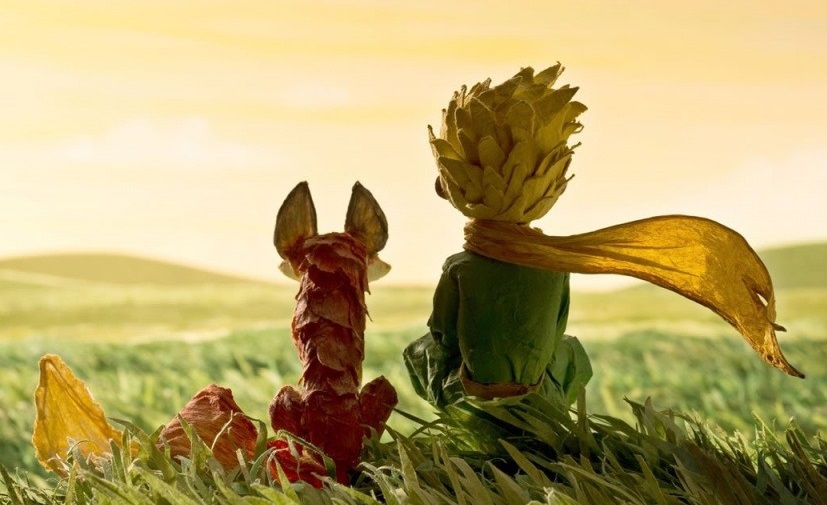
Antoine de Saint-Exupéry’s The Little Prince is often perceived as a children’s book, yet it is, in many ways, addressed primarily to adults. It is not so much a story about childhood as it is about what happens to a person while growing up and gradually losing the ability to see what truly matters. For readers of any age, the book becomes an invitation to reflect on values, responsibility, loneliness, and the capacity to remain human in a world where everything is measured by usefulness and results.
For me, The Little Prince became an important milestone in understanding what growing up really means. It helped me see that maturity is not simply the accumulation of experience and obligations, but a complex process of loss—and, potentially, of rediscovery. Through simple images and seemingly naïve dialogues, the book raises questions that are rarely discussed directly, yet inevitably accompany a person on the path from childhood to adulthood.
Adults Through a Child’s Eyes
One of the central themes of The Little Prince is the portrayal of adults as seen through a child’s perspective. Saint-Exupéry depicts adults as people trapped in their roles, functions, and numbers. They are preoccupied with power, money, vanity, calculations, and rules, while having lost the ability to experience genuine wonder or empathy.
These figures are not caricatures created merely for satire. Rather, they illustrate how growing up can turn into a gradual narrowing of one’s perception of the world. The adult characters in the book are neither evil nor cruel—they are simply too immersed in their own systems of meaning. Their lives are full of activity, yet empty of purpose.
For the reader, this becomes a mirror. Many familiar traits of adult life—status-seeking, fear of being useless, the urge to measure and categorize everything—are presented as symptoms of lost inner freedom. The Little Prince forces us to ask whether growing up, as it is commonly understood, is actually a form of surrendering the ability to perceive the world emotionally and holistically.
On a personal level, this part of the book led me to realize that maturity is not a natural progression but a choice. One can be an adult by age while remaining open and attentive to the intangible. Conversely, one can adopt the rules of the adult world early and lose sensitivity to anything that cannot be measured or justified by utility.
Responsibility and Attachment as the Foundation of Maturity
One of the most profound lessons of the book lies in its understanding of responsibility through attachment. The episode with the Fox and the act of taming offers a fundamentally different definition of maturity. To be grown up does not mean avoiding emotional bonds, but consciously accepting their consequences.
The Fox explains that taming creates a unique relationship that makes one person important to another. This bond brings no immediate practical benefit, yet it fills life with meaning. Growing up, in this sense, is not about emotional detachment, but about the willingness to take responsibility for one’s relationships.
This idea is especially striking in a modern world that values mobility, independence, and freedom from obligation. The Little Prince proposes an opposing logic: true freedom emerges not from the absence of ties, but from a conscious choice to care and remain present.
For me, this episode reshaped the concept of responsibility. Adulthood ceased to be associated solely with control, discipline, and rationality. Instead, it became connected to loyalty, patience, and attentiveness toward those who have become part of one’s world. This path is not always convenient, but it is precisely here that the depth of human experience reveals itself.
Loss and the Possibility of Meaning
Many episodes of the book are permeated by a sense of loss. Adults lose their ability to delight in simple things, to perceive the beauty of the desert, or to listen to silence. They live in constant haste, yet cannot answer the question of why they are rushing at all.
However, The Little Prince is not a pessimistic work. It does not claim that growing up inevitably leads to the loss of meaning. On the contrary, it suggests the possibility of return. This return does not require rejecting adult life, but rather reconsidering one’s priorities.
Saint-Exupéry shows that meaning does not disappear—it becomes less visible. To rediscover it, one must slow down, pay attention, and make an inner effort. In this way, growing up can be not an ending, but the beginning of a new stage of awareness.
For me, this idea proved especially significant. The book helped me understand that feelings of emptiness or fatigue associated with adult life are not signs of weakness, but signals that one’s values may need reassessment. In this sense, The Little Prince does not condemn adulthood—it offers a more humane and honest version of it.
Learning to See What Matters
The famous line “what is essential is invisible to the eye” is often quoted, but frequently oversimplified. Within the context of the entire book, it does not suggest mysticism or a rejection of rational thought. Rather, it speaks to the necessity of inner attentiveness.
The ability to see what truly matters is a skill that requires maturity, not naïveté. It is the capacity to distinguish the essential from the secondary, to avoid confusing meaning with form, and value with usefulness. In this sense, The Little Prince proposes an alternative model of growing up—not the accumulation of roles and achievements, but the development of inner vision.
This skill is particularly relevant in a world saturated with information, constant evaluation, and endless comparison. Saint-Exupéry’s book reminds us that maturity can be a process of deepening rather than hardening. It is a path toward a more careful and compassionate relationship with life, with others, and with oneself.
For me, this became the central lesson. The Little Prince changed not my attitude toward childhood, but toward adulthood. It showed that growing up does not have to mean losing one’s humanity. On the contrary, it is the adult who can consciously preserve the ability to see what truly matters—if they are willing to engage in inner work.
Key Takeaways
-
The Little Prince presents growing up as a risk of losing meaning rather than an automatic form of progress.
-
Maturity is defined not by rationality, but by responsibility for emotional bonds and attachments.
-
The loss of sensitivity and attention is not inevitable, but the result of value-based choices.
-
The ability to see what matters most requires awareness, maturity, and inner effort.
Conclusion
The Little Prince remains relevant because it speaks honestly about growing up, without moralizing or nostalgia. It does not oppose children and adults, but instead shows what a mature person can be when they do not abandon their humanity. The book does not offer instructions on how to live, but it helps articulate questions without which growing up risks becoming a purely mechanical existence.